
Allegany County Death Index
Allegany County death index records date back to 1881, when New York State began requiring registration of vital events. The county was formed in 1806 from Genesee County, and Belmont serves as the county seat. Death records in Allegany County are not held at the county clerk level. Instead, local town clerks serve as registrars of vital statistics, and the New York State Department of Health maintains state-level copies. Researchers working with the Allegany County death index should contact individual town clerks or the state DOH office to locate specific records. Land records at the county go back to 1807, but vital records follow a different path.
Allegany County Death Index Overview
Allegany County Death Records Overview
The Allegany County Office Building is at 7 Court Street, Belmont, NY 14813. The county clerk there handles land records, court filings, and other county documents. Birth and death records are not part of the county clerk's holdings. This is the same system used in most New York counties outside of New York City.
Death records in Allegany County are filed with the town clerk where the death occurred. The county has over 30 towns, each with its own clerk. This makes searching the Allegany County death index a matter of knowing where the person died, not just that they lived in the county.
Allegany County was carved from Genesee County in 1806. The parent counties were Allegany and Genesee. Records predating the county's formation may be filed under Genesee County. Researchers looking for very early death records should check both county systems.
Town Clerks and Local Death Index Records
Allegany County has many small towns. Each one has a clerk who registers deaths. The towns include Alfred, Allen, Alma, Almond, Amity, Andover, Angelica, Belfast, Belmont, Birdsall, Bolivar, Burns, Canaseraga, Caneadea, Centerville, Clarksville, Cuba, Friendship, Genesee, Granger, Grove, Hume, Independence, New Hudson, Richburg, Rushford, Scio, Ward, Wellsville, West Almond, Willing, and Wirt.
Contact the specific town clerk for the place where the death happened. Most clerks keep records going back to 1881. Some towns have older records, but coverage is not consistent. Hours vary by town, and many small town clerks have limited office hours.
If you do not know which town the death occurred in, the state death index is your best starting point. The NYS Archives has microfiche indexes that list the place of death along with the name and date. This can help you figure out which town clerk to contact in Allegany County.
New York State Death Index for Allegany County
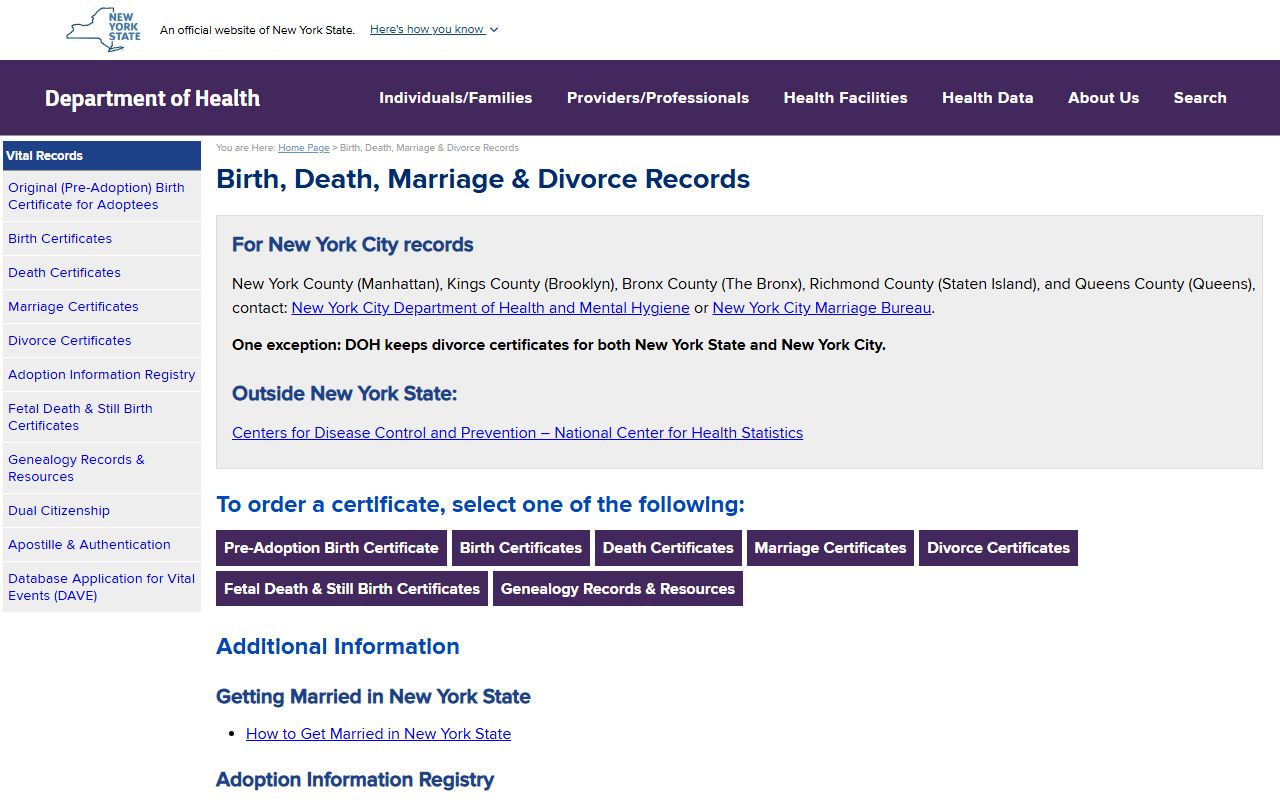
The statewide death index covers records from the early 1880s. Death indexes are made public after 50 years. The NYS DOH Vital Records Section holds copies of all death records filed across the state, including those from Allegany County towns.
To request a copy from the state, write to NYS DOH Vital Records, PO Box 2602, Albany, NY 12220-2602. You can also call their toll-free number at (855) 322-1022. Fees for a genealogy copy start at $22 for a 1 to 3 year search. Wider searches cost more, up to $202 for an 81 to 90 year span.
Processing takes a long time. The state office reports wait times of 8 months or more for genealogy requests. Local town clerks in Allegany County are often much faster. If you know the town, go local first.
Searching the Death Index at State Archives
The New York State Archives in Albany has microfiche copies of death indexes. These are free to view in person. The indexes list names, dates, and places of death along with certificate numbers. You can use the certificate number to order a full copy from either the local registrar or the state DOH.
Vital records are not subject to FOIL (Freedom of Information Law) requests in New York. Death records have their own rules under the Public Health Law. Under 10 NYCRR 35.4, the state sets the rules for how death records are filed and who can access them.
Genealogy copies are available for deaths that occurred more than 50 years ago. These copies are marked "for genealogy purposes only" and cannot be used for legal transactions. If you need a certified copy for legal use, different rules and fees may apply.
Tips for Allegany County Death Index Research
Allegany County is rural. Many of the towns are small. Records may be sparse for early years. The 1881 start date for vital records registration means anything before that year is unlikely to exist in official form. Church records, cemetery records, and newspaper obituaries can fill gaps for earlier periods.
The Wellsville town clerk is one of the busier offices in Allegany County. Wellsville is the largest village and has more records on file than most other towns. If the person you are researching lived in the Wellsville area, that clerk is the best first contact.
For land records tied to Allegany County residents, the county clerk has files going back to 1807. While these are not death records, property transfers after death (probate, estate settlements) can provide clues about death dates and family relationships. Cross-referencing land and death records is a solid research strategy.
Online Resources for Allegany County Death Records
The NYS DOH genealogy page has instructions for ordering death records by mail. The NYS Archives microfiche indexes are another key resource for Allegany County death entries. These indexes cover deaths registered at the state level and can help you identify records before you order copies.
The NYS Archives maintains microfiche indexes for death records across the state, including Allegany County. These indexes are available at the Archives research room in Albany and through interlibrary loan at some locations. The NYS Department of Health also offers death index downloads for genealogical research that can help you find Allegany County records before ordering official copies.
Nearby Counties
Allegany County borders Cattaraugus County to the west, Livingston County to the north, Steuben County to the east, and shares a border with Pennsylvania to the south. If the person you are researching moved between counties, checking death indexes in neighboring counties may turn up the record you need.