
Oswego County Death Index Search
Oswego County death index records are held by town and city clerks across this central New York county that sits along Lake Ontario. Formed in 1816 from parts of Oneida and Onondaga counties, Oswego County has its seat in the City of Oswego. The City of Oswego maintains its own vital records through the city clerk, while death records in other parts of the county are filed with individual town clerks. Researchers need to identify where the death was registered before contacting the right office.
Oswego County Death Index Overview
Oswego County Death Records Overview
The Oswego County Clerk does not maintain birth, death, or marriage records. These fall under the jurisdiction of local town and city clerks. The county clerk handles property records, court filings, pistol permits, and other county-level documents.
The City of Oswego maintains its own vital records. If the death occurred within the city limits, the Oswego City Clerk is the first office to contact. The city has been the county seat since 1816 and has a long history of record-keeping. Hospital deaths at Oswego Hospital are filed with the city clerk as well.
For deaths in other parts of the county, contact the town clerk where the death took place. Oswego County includes towns like Fulton, Granby, Hannibal, Mexico, Palermo, Parish, Richland, Sandy Creek, Schroeppel, Scriba, Volney, West Monroe, and Williamstown. The City of Fulton also maintains its own vital records separately from the town clerks.
How to Find Death Index Records
Knowing where the death occurred is the most important step. The municipality determines which clerk holds the record. Hospital deaths get filed in the town or city where the hospital is located, not where the person lived. This catches many researchers off guard.
If you do not know the location of death, start with the statewide index. The NYS Archives has microfiche indexes covering death records from the 1880s forward. These are free to search in person at the Archives in Albany. The indexes give you the name, date, place of death, and a certificate number.
Once you have the certificate number, order a copy from the NYS Department of Health at PO Box 2602, Albany, NY 12220-2602. You can also call (855) 322-1022. Or go back to the local clerk with the details you found and request a copy directly from them.
Death Certificate Fees and Processing
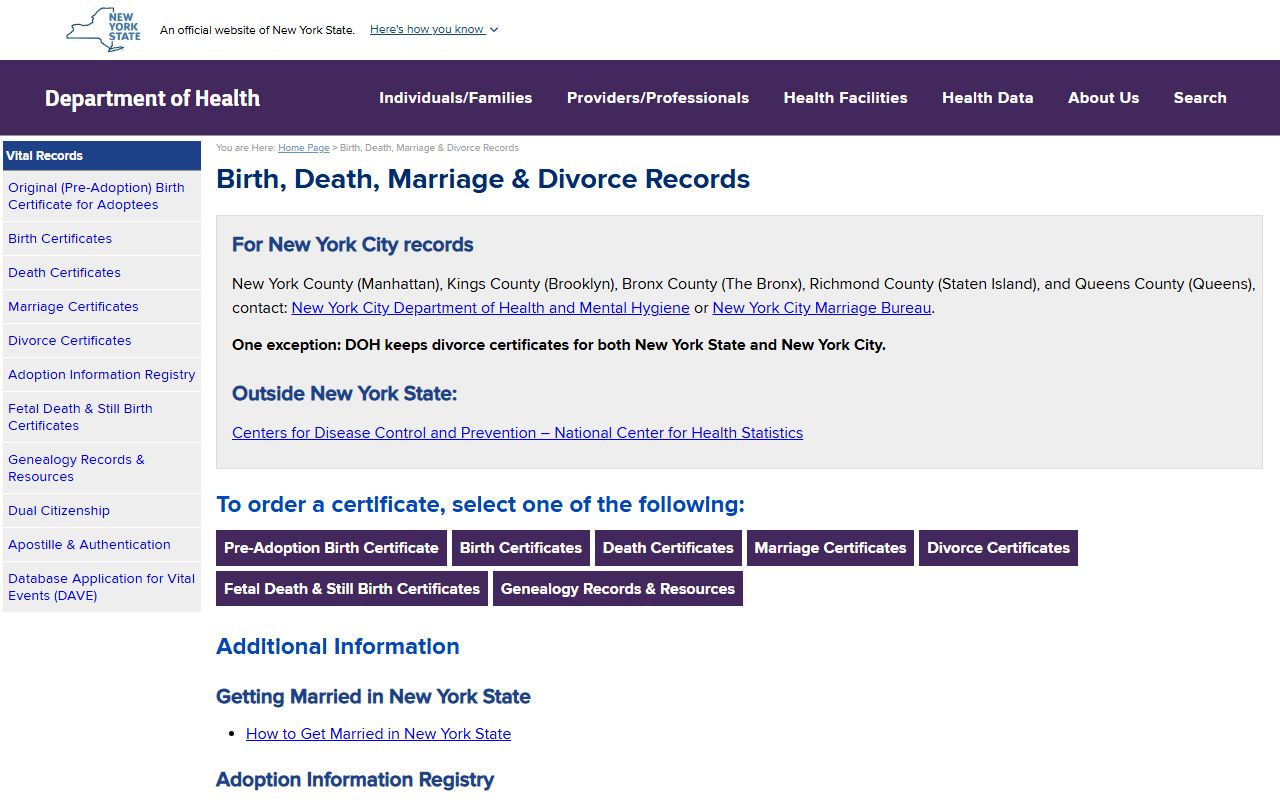
Local clerk fees in Oswego County vary by municipality. Most charge between $10 and $30. Call the specific clerk to confirm the current fee before mailing a request.
The NYS DOH charges $22 for a genealogy search of 1 to 3 years. Wider searches cost more, up to $202 for 81 to 90 years. If you can narrow the search to a few years, you keep costs down. Genealogy copies are available for deaths over 50 years old. Direct-line descendants can get copies without the 50-year waiting period.
State processing times currently run 8 months or longer for genealogy requests. Local clerks in Oswego County can often respond in days or weeks. Going local is almost always faster when you know the right municipality. Under 10 NYCRR 35.4, the state sets registration rules for all vital records. Death certificates are not subject to FOIL requests.
Oswego County Genealogy Resources
The Oswego County Historical Society holds collections that can help with death index research. Family files, local histories, and manuscript collections may contain death-related information. The society is based in Oswego and can direct researchers to relevant holdings.
The Oswego Public Library has genealogy resources including microfilm of local newspapers. Obituaries in the Palladium-Times and other Oswego County papers provide death dates, family details, and burial locations. These can help you narrow down when and where a death was recorded before you pay for a certificate.
Cemetery records are another useful source. Oswego County has many cemeteries with burial registers dating back to the early 1800s. Riverside Cemetery in Oswego and other burial grounds keep records that list date of death, age, and sometimes the cause. Local genealogy groups have transcribed some of these records and posted them online.
Historical Context for Records
Oswego County was formed in 1816 from parts of Oneida and Onondaga counties. Records from before 1816 that cover the Oswego area may be filed under those parent counties. This is important for researchers looking at early 19th century deaths.
The port city of Oswego was a major entry point on Lake Ontario. Maritime deaths and drownings along the waterfront were sometimes registered differently than deaths on land. Coroner's records from the 1800s may have details about accidental deaths that do not appear in standard vital records.
New York State began requiring statewide vital records registration in the early 1880s. Before that date, death records in Oswego County were kept by local clerks, churches, and sometimes not at all. Pre-1880 death records are spotty, and you may need to use church records, cemetery records, and newspaper notices to piece together what happened.
Ordering Death Certificates
When writing to a local clerk, include these details:
- Full name of the deceased (include maiden name if applicable)
- Date of death or approximate range
- Place of death if known
- Your relationship to the deceased
- Check or money order for the fee
For state requests, use the same information and mail it to the NYS DOH. Specify whether you need a certified copy or a genealogy copy. Genealogy copies contain the same information but cannot be used for legal purposes. They are available for deaths that occurred more than 50 years ago.
Nearby Counties
Oswego County borders Jefferson County to the north, Lewis County to the northeast, Oneida County to the east, Onondaga County to the south, and Cayuga County to the southwest. Lake Ontario forms the western boundary. Death records in neighboring counties follow the same local registrar system.